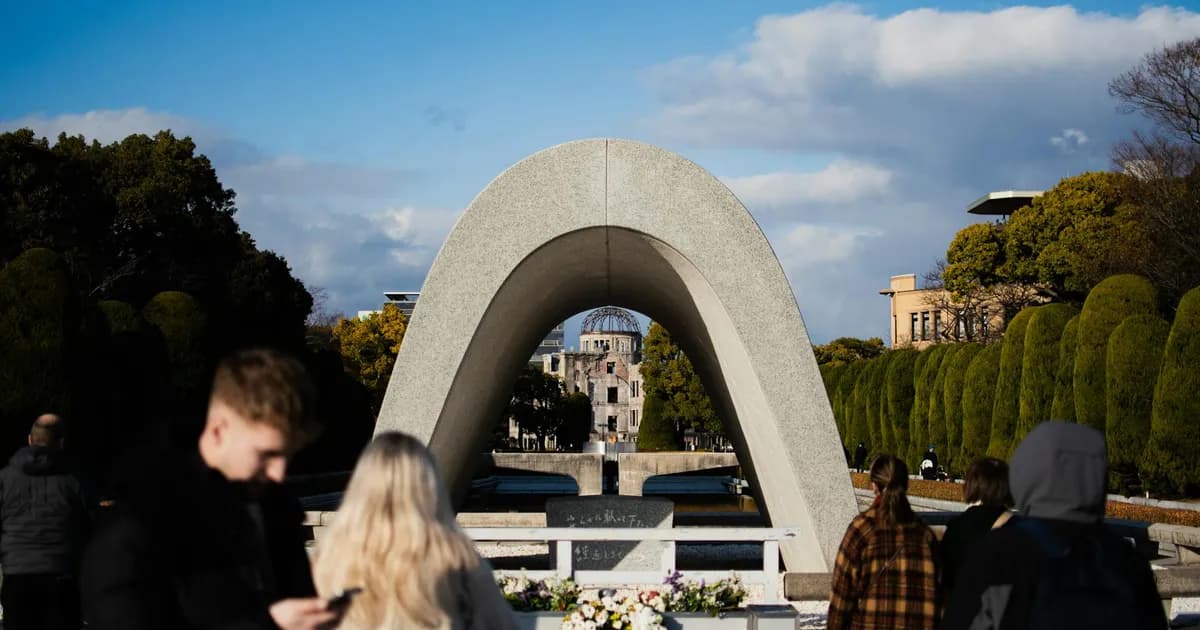
Hiroshima Peace Memorial: Skip It or Essential Stop?
YES. Visit the Hiroshima Peace Memorial. It's not the soul-crushing experience you're dreading, and honestly, skipping it would be like going to Berlin and avoiding the Berlin Wall Memorial—you'd miss the entire point of why Hiroshima Peace Memorial matters.
I'll be straight with you: I almost didn't go. I thought it'd be three hours of feeling like garbage while looking at burned artifacts. Instead, I got the most thoughtfully designed memorial I've seen anywhere, better WiFi than my Airbnb, and a perspective shift I didn't know I needed.
Here's everything you actually need to know about visiting the Hiroshima Peace Memorial, including what costs money (spoiler: almost nothing), what to skip, and why this should be your first stop in Hiroshima—not your last.
What Actually Is the Hiroshima Peace Memorial?
💡 Related: I Wasted $280 on a JR Pass (Here's When It's Worth It)
The Hiroshima Peace Memorial refers to the entire Peace Memorial Park complex, which includes the Peace Memorial Museum, the Atomic Bomb Dome, the Cenotaph, and about 70 other monuments spread across 122,100 square meters.
The Atomic Bomb Dome—that skeletal building you've seen in photos—is the only structure left standing near the bomb's hypocenter. It's been preserved exactly as it was after August 6, 1945. UNESCO designated it a World Heritage Site in 1996, and it's the most photographed spot in Hiroshima for good reason.
The park itself is free. You can walk through, see the dome, visit most monuments, and spend hours there without spending a yen. Only the Peace Memorial Museum charges admission.
Gear for This Trip
Perfect city daypack. Fits laptop, water bottle, and snacks without bulk.
All-day exploring needs all-day battery. Compact and fast-charging.
Block out subway noise, enjoy podcasts between stops.
Phone cameras are good. This is better — fits in your pocket.
As an Amazon Associate I earn from qualifying purchases.
Hiroshima Peace Memorial Museum: The Main Event
Cost & Hours Breakdown
| Item | Cost | Notes |
|---|---|---|
| Museum admission | ¥200 (~$1.35) | Seriously. Less than a coffee. |
| Audio guide | ¥400 (~$2.70) | English, Chinese, Korean, French available |
| Park entry | FREE | Open 24/7 |
| Atomic Bomb Dome viewing | FREE | Exterior only, can't enter |
| Most monuments | FREE | About 70+ scattered throughout park |
Museum hours: 8:30 AM - 6:00 PM (March-November), 8:30 AM - 5:00 PM (December-February). Last entry 30 minutes before closing. Closed December 30-31.
The museum underwent a major renovation completed in 2019. The new design is... look, it's incredible. They stripped out the outdated 1990s exhibit style and rebuilt it with modern museum curation that focuses on individual stories instead of just horror porn.
💡 Pro tip: Go when it opens at 8:30 AM. By 10 AM, tour groups flood in and you'll be shuffling through the exhibits instead of reading them. The morning light also hits the Atomic Bomb Dome perfectly for photos.
What's Inside (And What Actually Matters)
The museum splits into two buildings: East Building (historical context, why the bomb was dropped) and Main Building (the actual bombing and aftermath).
East Building starts with Hiroshima before the bomb—a military city, yes, but also a place where 350,000 people lived normal lives. This context matters because it makes what comes next hit harder.
💡 Related: I Wasted $280 on a JR Pass (Here's When It's Worth It)
Main Building is where things get real. You'll see:
- A watch stopped at 8:15 AM
- Shadows burned into stone steps
- A tricycle a three-year-old was riding when he died
- Personal belongings recovered from victims
Is it sad? Obviously. Is it manipulative or guilt-trippy? No. That's what surprised me. The museum doesn't shame visitors or push a political agenda. It just shows what happened and lets you form your own conclusions.
The renovated exhibits include testimonies from survivors (hibakusha) with video recordings. These are the sections that'll mess you up more than the artifacts—hearing an 85-year-old woman describe finding her mother's body while her voice cracks.
Time needed: 90 minutes minimum. I spent 2.5 hours and still didn't read everything.
trong>YES. Visit the Hiroshima Peace Memorial. It's not the soul-crushing experience you're dreading, and honestly, skipping it would be like going to Berlin and avoiding the Berlin Wall Memorial—you'd miss the entire point of why Hiroshima Peace Memorial matters.I'll be straight with you: I almost didn't go. I thought it'd be three hours of feeling like garbage while looking at burned artifacts. Instead, I got the most thoughtfully designed memorial I've seen anywhere, better WiFi than my Airbnb, and a perspective shift I didn't know I needed.
Here's everything you actually need to know about visiting the Hiroshima Peace Memorial, including what costs money (spoiler: almost nothing), what to skip, and why this should be your first stop in Hiroshima—not your last.
What Actually Is the Hiroshima Peace Memorial?
💡 Related: I Wasted $280 on a JR Pass (Here's When It's Worth It)
The Hiroshima Peace Memorial refers to the entire Peace Memorial Park complex, which includes the Peace Memorial Museum, the Atomic Bomb Dome, the Cenotaph, and about 70 other monuments spread across 122,100 square meters.
The Atomic Bomb Dome—that skeletal building you've seen in photos—is the only structure left standing near the bomb's hypocenter. It's been preserved exactly as it was after August 6, 1945. UNESCO designated it a World Heritage Site in 1996, and it's the most photographed spot in Hiroshima for good reason.
The park itself is free. You can walk through, see the dome, visit most monuments, and spend hours there without spending a yen. Only the Peace Memorial Museum charges admission.
Hiroshima Peace Memorial Museum: The Main Event
Cost & Hours Breakdown
| Item | Cost | Notes |
|---|---|---|
| Museum admission | ¥200 (~$1.35) | Seriously. Less than a coffee. |
| Audio guide | ¥400 (~$2.70) | English, Chinese, Korean, French available |
| Park entry | FREE | Open 24/7 |
| Atomic Bomb Dome viewing | FREE | Exterior only, can't enter |
| Most monuments | FREE | About 70+ scattered throughout park |
Museum hours: 8:30 AM - 6:00 PM (March-November), 8:30 AM - 5:00 PM (December-February). Last entry 30 minutes before closing. Closed December 30-31.
The museum underwent a major renovation completed in 2019. The new design is... look, it's incredible. They stripped out the outdated 1990s exhibit style and rebuilt it with modern museum curation that focuses on individual stories instead of just horror porn.
💡 Pro tip: Go when it opens at 8:30 AM. By 10 AM, tour groups flood in and you'll be shuffling through the exhibits instead of reading them. The morning light also hits the Atomic Bomb Dome perfectly for photos.
What's Inside (And What Actually Matters)
The museum splits into two buildings: East Building (historical context, why the bomb was dropped) and Main Building (the actual bombing and aftermath).
East Building starts with Hiroshima before the bomb—a military city, yes, but also a place where 350,000 people lived normal lives. This context matters because it makes what comes next hit harder.
💡 Related: I Wasted $280 on a JR Pass (Here's When It's Worth It)
Main Building is where things get real. You'll see:
- A watch stopped at 8:15 AM
- Shadows burned into stone steps
- A tricycle a three-year-old was riding when he died
- Personal belongings recovered from victims
Is it sad? Obviously. Is it manipulative or guilt-trippy? No. That's what surprised me. The museum doesn't shame visitors or push a political agenda. It just shows what happened and lets you form your own conclusions.
The renovated exhibits include testimonies from survivors (hibakusha) with video recordings. These are the sections that'll mess you up more than the artifacts—hearing an 85-year-old woman describe finding her mother's body while her voice cracks.
Time needed: 90 minutes minimum. I spent 2.5 hours and still didn't read everything.
The Atomic Bomb Dome: Your First Stop
The A-Bomb Dome sits on the northern edge of Peace Memorial Park, about 160 meters from the bomb's hypocenter. The building was the Hiroshima Prefectural Industrial Promotion Hall before 1945, and it's the single most powerful visual in the entire memorial complex.
Why it survived: The bomb exploded almost directly above it at 600 meters altitude. The blast force pushed straight down instead of laterally, so the walls stayed standing while everything horizontal (floors, roof, people) was obliterated.
You can't go inside—it's structurally maintained but not safe to enter. You don't need to. Walking around it and seeing it from different angles tells you everything.
Best viewing spots:
1. Motoyasu Bridge (southwest side): Classic photo angle with river reflection
2. North bank path: Eye-level view showing structural details
3. From Peace Memorial Museum second floor: Aerial perspective with park layout
The dome looks different depending on weather and time of day. Overcast skies make it look more ominous. Sunset turns it golden. I visited on a rainy Tuesday morning and the wet concrete made the whole thing look like it was still smoldering.
💡 Pro tip: Visit the dome BEFORE the museum. Seeing it first gives you a physical anchor point for all the museum exhibits. When you read "160 meters from hypocenter," you'll know exactly what that means because you were just standing there.
💡 Related: I Wasted $280 on a JR Pass (Here's When It's Worth It)
Getting to Hiroshima Peace Memorial
The memorial park sits in central Hiroshima, making it stupid easy to reach from anywhere in Hiroshima Peace Memorial.
From Hiroshima Station
📍 Related: 27 Well Known Places in Japan You Can't Skip (2026)
| Method | Cost | Time | Best For |
|---|---|---|---|
| Tram (streetcar) #2 or #6 | ¥220 (~$1.50) | 20 min | Budget travelers, first-timers |
| Tram + walking | ¥220 | 15 min walk + tram | Seeing Hiroshima Peace Memorial |
| Taxi | ¥1,500-2,000 (~$10-13) | 10 min | Groups, luggage, lazy days |
| Walking | FREE | 40 min | If you hate money and love walking |
The tram is your best bet. Get off at "Genbaku Dome-mae" (Atomic Bomb Dome) stop. The dome is literally right there. The Hiroshima Electric Railway runs these streetcars every 5-10 minutes.
If you bought a JR West Kansai-Hiroshima Pass for your trip from Kyoto or Osaka, it doesn't cover the Hiroshima streetcars (annoying). The pass gets you to Hiroshima Station on the Shinkansen but not around the city.
From Other Cities
From Kyoto: Take the Kyoto to Hiroshima Shinkansen (Nozomi or Hikari). Takes 1 hour 40 minutes, costs ¥11,550 (~$77) one-way. The Kansai-Hiroshima Area Pass (¥17,000 for 5 days) covers this route and is worth it if you're doing Kyoto → Osaka → Hiroshima in one trip. Check JR West's official pass details.
From Tokyo: The Tokyo to Hiroshima bullet train takes 4 hours on the Nozomi Shinkansen, costs ¥19,440 (~$130) one-way. If you have a JR Pass, you'll need the Hikari train (20 minutes slower, same route). Book through the Japan Railways official site.
From Osaka: The bullet train from Osaka to Hiroshima runs every 30 minutes, takes 1.5 hours, costs ¥10,570 (~$71). The Kansai-Hiroshima Area Pass makes this trip basically free if you're doing multiple legs.
Peace Memorial Park Layout: What to See (And Skip)
The park sprawls across both sides of the Motoyasu River. You could spend six hours hitting every monument, or you could focus on what actually matters. Here's my hierarchy:
Tier 1: Don't Skip These
📍 Related: 5 Days in Tokyo? I Wasted Day 3 (Use This Instead)
Peace Memorial Museum - Already covered. This is why you came.
Atomic Bomb Dome - Ditto.
Cenotaph for A-Bomb Victims - The arch-shaped memorial that holds the names of all confirmed victims (currently over 330,000 names). Stand in front of it and look through the arch—it perfectly frames the Peace Flame and the A-Bomb Dome beyond. This sight line was intentional.
Peace Flame - Has burned continuously since 1964 and will keep burning until all nuclear weapons are eliminated. So, forever probably.
Children's Peace Monument - Inspired by Sadako Sasaki, who developed leukemia from radiation exposure and folded origami cranes hoping to survive. Visitors leave thousands of paper cranes here daily. It's the most colorful spot in an otherwise somber park.
Tier 2: See If You Have Time
Memorial Hall for Atomic Bomb Victims - Underground facility with a panoramic view showing the city post-bombing. Free admission. Powerful but redundant if you've already done the museum.
Korean Victims Memorial - Acknowledges the estimated 20,000+ Koreans (forced laborers) who died in the bombing. Located just outside the main park near the river.
Rest House - One of the few buildings that survived near the hypocenter. Now functions as a tourist info center with a basement you can visit. The basement saved the one person who was inside when the bomb dropped.
Tier 3: Skip Unless You're a Completionist
The park has 70+ monuments. Most are donated by various organizations and cities. They're fine. You don't need to see all of them. The "Peace Bell" is nice if you want to ring a bell, I guess.
💡 Pro tip: Download the free "Hiroshima Peace Memorial Park" app before visiting. It has a GPS-guided audio tour that automatically plays information as you walk near monuments. Better than paying for the audio guide.
How Much Time to Spend at Hiroshima Peace Memorial
Minimum: 3 hours (museum + dome + cenotaph + quick walk)
📍 Related: Don't Buy a JR Pass Until You Read This (Might Waste $280)
Recommended: 4-5 hours (everything above + lunch break + thorough museum visit)
Maximum useful time: 6 hours (only if you're reading every plaque and visiting every monument)
I spent 5 hours total and could've used more time in the museum. But I'm also the person who reads every museum placard, so adjust based on your attention span.
Best time to visit: Weekday mornings. August 6 (bombing anniversary) is the most crowded day of the year—avoid unless you specifically want to attend the ceremony. Weekends get tour groups but aren't terrible.
Worst time to visit: July-August afternoons. Hiroshima heat is brutal, and the park has limited shade. You'll be melting while contemplating humanity's darkest moment. Not ideal.
Where to Stay Near Hiroshima Peace Memorial
Staying near the peace memorial puts you in central Hiroshima, which is convenient for everything.
Best Areas to Stay in Hiroshima
Nakajima-cho / Peace Park area - Walking distance to the memorial. Quiet at night, close to restaurants along Peace Boulevard. Hotels here book up fast.
Hondori / Downtown area - 15-minute walk from the peace memorial, more food options, shopping arcade, nightlife. This is where I stayed and would recommend it over the park area.
Near Hiroshima Station - Only makes sense if you're arriving late or leaving early. It's a 20-minute tram ride to the memorial, but hotels are cheaper.
Specific Recommendations
| Hotel | Distance to Memorial | Price Range | Why It's Good |
|---|---|---|---|
| Rihga Royal Hotel Hiroshima | 5-min walk | ¥15,000-25,000/night (~$100-167) | Closest upscale option, English-speaking staff |
| Hotel Granvia Hiroshima | Near station | ¥12,000-20,000/night (~$80-133) | Connected to station, convenient for Shinkansen |
| Santiago Guesthouse | 10-min walk | ¥3,500-5,000/night (~$23-33) | Budget pick, good for nomads, decent WiFi |
| Nest Hotel Hiroshima | Downtown | ¥8,000-12,000/night (~$53-80) | Mid-range sweet spot, near restaurants |
Book accommodations through standard channels—rooms near the peace memorial typically start around ¥8,000/night for decent quality. Check current rates for your dates since prices fluctuate based on season and events.
Digital Nomad Notes: Working Near the Memorial
WiFi at the Peace Memorial Museum: Actually solid. Free, no login required, surprisingly fast. I got 15 Mbps down, which is fine for email and light work but not for video calls.
Laptop-friendly spots within walking distance:
Sempre Pizza (5-min walk) - Good coffee, power outlets at most tables, WiFi that doesn't time out. Opens at 11 AM. ★★★★☆
Starbucks Peace Boulevard (7-min walk) - Standard Starbucks experience. Reliable but can get loud. ★★★☆☆
Hiroshima City Library (10-min walk) - Free, quiet, fast WiFi, open until 7 PM on weekdays. Best option if you need actual focus. ★★★★★☆
The memorial park itself has free WiFi in certain zones, and you can technically work on a bench if the weather's nice. I wrote half an article sitting near the peace fountain on a Thursday morning. Just be respectful—maybe don't take Zoom calls next to a monument about nuclear war.
Food & Practical Stuff
Where to Eat Near the Memorial
Okonomimura (15-min walk): Four-story building with 24 okonomiyaki restaurants. Hiroshima-style okonomiyaki includes noodles and is objectively better than Osaka-style. Fight me. Expect to pay ¥900-1,500 (~$6-10) per okonomiyaki.
Mitchan Sohonten (12-min walk): Local favorite for okonomiyaki since 1950. ¥1,200-1,800 per dish. Worth the line if you visit during lunch hours.
Rest House cafe (inside Peace Park): Basic coffee and snacks. Convenient if you need caffeine but nothing special. ¥400-800.
Lawson / 7-Eleven (multiple locations nearby): Do not underestimate Japanese convenience store food. Grab an onigiri and a coffee for ¥400 total and eat it on a park bench. I did this twice.
Bathrooms, Water, Storage
Bathrooms: Multiple clean public restrooms throughout Peace Memorial Park. Japanese public toilet quality standards are light-years ahead of most countries.
Water fountains: Several throughout the park. The water is safe to drink (it's Japan).
Coin lockers: Available at Hiroshima Station and at the Peace Memorial Museum entrance. ¥300-500 depending on size. Store your luggage here if you're visiting between hotels.
Tourist info: Rest House inside the park has English-speaking staff who can answer questions and provide maps.
What to Skip (Save Your Time)
Hiroshima Castle: Fine, but not special if you've already seen Himeji, Osaka, or any other Japanese castle. The current structure is a 1958 concrete reconstruction. The peace memorial matters more. ★★☆☆☆
Shukkeien Garden: Pretty traditional Japanese garden, but Tokyo, Kyoto, and Kanazawa have better ones. Only visit if you have extra time after the memorial. ★★★☆☆
Mazda Museum: Enthusiasts love it. If you don't care about cars, skip it. Located outside the city center anyway.
"Hiroshima Peace Walking Tours": Some are good, most are overpriced (¥5,000-8,000). The museum's audio guide for ¥400 gives you 95% of what you'd get from a tour. Save your money.
Comparing to Other War Memorials
If you've been to similar sites, here's how Hiroshima Peace Memorial stacks up:
| Memorial | Emotional Impact | Educational Value | Design Quality | Admission Cost |
|---|---|---|---|---|
| Hiroshima Peace Memorial | ★★★★★ | ★★★★★ | ★★★★★ | ¥200 (~$1.35) |
| Berlin Wall Memorial | ★★★★☆ | ★★★★☆ | ★★★★☆ | FREE |
| 9/11 Memorial Museum (NYC) | ★★★★★ | ★★★★☆ | ★★★★☆ | $33 |
| Auschwitz-Birkenau | ★★★★★ | ★★★★★ | ★★★☆☆ | ~$8 |
| USS Arizona Memorial | ★★★★☆ | ★★★☆☆ | ★★★☆☆ | FREE |
The Hiroshima Peace Memorial hits harder than the Berlin Wall Memorial because the scale of instant devastation is incomprehensible. Berlin's division happened over decades; Hiroshima's destruction took seconds.
Compared to the 9/11 Memorial Museum, Hiroshima feels less politicized and more universal in its anti-war message. New York's memorial is powerful but specifically American. Hiroshima speaks to everyone.
Daily Budget Breakdown for Visiting
Here's what a full day focused on the Hiroshima Peace Memorial actually costs:
| Expense | Budget | Mid-Range | Splurge |
|---|---|---|---|
| Accommodation (per night) | ¥3,500 (guesthouse) | ¥10,000 (business hotel) | ¥20,000 (near park) |
| Breakfast | ¥400 (konbini) | ¥800 (cafe) | ¥2,000 (hotel) |
| Transportation | ¥440 (tram round-trip) | ¥440 (tram) | ¥4,000 (taxi round-trip) |
| Museum admission | ¥200 | ¥600 (with audio guide) | ¥600 |
| Lunch | ¥800 (konbini) | ¥1,500 (okonomiyaki) | ¥3,000 (restaurant) |
| Dinner | ¥1,000 (cheap restaurant) | ¥2,500 (good okonomiyaki) | ¥6,000 (nice dinner) |
| Snacks/drinks | ¥500 | ¥1,000 | ¥2,000 |
| Extras | ¥0 | ¥1,000 (souvenirs) | ¥3,000 |
| TOTAL | ¥6,840 (~$45) | ¥17,840 (~$119) | ¥40,600 (~$271) |
My actual spend: ¥14,200 (~$95) for a full day including accommodation, all meals, museum entry, tram rides, and way too much okonomiyaki.
The peace memorial itself costs basically nothing. Your main expenses are accommodation and food, which is true for any destination in Japan.
Should You Visit Hiroshima Peace Memorial?
YES, with very few exceptions.
Skip it only if:
- You have extreme PTSD or trauma triggers related to war/death
- You're in Hiroshima for less than 4 hours total (prioritize food instead)
- You genuinely don't give a shit about history (why are you even traveling?)
Visit if:
- You're in Hiroshima for any reason
- You care about understanding modern history
- You want context for Japan's post-war pacifist constitution
- You've never visited a site like this before
Is it depressing? Yes, in the way that understanding reality is sometimes depressing. But it's not gratuitously dark or manipulative. The museum treats visitors like adults capable of processing difficult information.
Is it appropriate for kids? The museum recommends ages 10+. Use your judgment. Japanese elementary school students visit on field trips, so it's not considered too intense for kids here, but cultural norms vary.
Rating: ★★★★★ (5/5)
This is one of the most important historical sites in the world, costs almost nothing, teaches you something you can't learn elsewhere, and the museum design is genuinely world-class. Not visiting would be bizarre.
FAQ
Q. How long does it take to visit Hiroshima Peace Memorial?
Plan for 3-5 hours minimum. The peace memorial museum alone takes 90 minutes to 2.5 hours if you read exhibits thoroughly. Add another hour for the Atomic Bomb Dome, cenotaph, and walking the park. If you want to visit the Memorial Hall or see multiple monuments, budget 5-6 hours. Most people spend a half-day (4 hours) and feel satisfied.
Q. Can I visit the Hiroshima Peace Memorial on the same day as Miyajima?
Yes, but it'll be rushed. The peace memorial needs 3-5 hours, and Miyajima deserves 4-6 hours plus 1 hour of ferry/transit each way. You'd need to start at 8:30 AM and hustle. Better to dedicate separate days to each, or do the memorial in the morning (8:30 AM-1 PM) and Miyajima afternoon/evening if you're tight on time. Don't try to do both thoughtfully in one day—you'll end up doing neither justice.
Q. Is the Hiroshima Peace Memorial worth visiting if I'm not into museums?
Yes, because the Atomic Bomb Dome and Peace Memorial Park are outdoors and free. You can see the dome, walk the park, visit the monuments, and understand the significance without entering the museum. That said, you'd be missing the best part. The museum is only ¥200 and doesn't feel like a typical museum—it's more like walking through history. Even museum-haters find it compelling because the story is so immediate and personal.
Q. What should I not do at Hiroshima Peace Memorial?
Don't take selfies at the Atomic Bomb Dome or cenotaph—it's tacky and disrespectful. Don't rush through the museum in 30 minutes just to check a box. Don't skip the East Building thinking it's less important (it provides crucial context). Don't visit in summer afternoon heat without water. Don't bring large luggage into the museum—use the coin lockers. And don't come with a "was the bombing justified?" debate attitude; save that for later. Just observe and learn first.
Q. How much does it cost to visit Hiroshima Peace Memorial total?
The peace memorial park and Atomic Bomb Dome are completely free. The Peace Memorial Museum costs ¥200 (~$1.35) for adults, ¥100 for high school students, free for middle school and younger. Audio guide adds ¥400. Transportation from Hiroshima Station is ¥220 each way on the tram. Total cost for a thorough visit: around ¥640-1,040 (~$4-7) including transport and museum. Food and accommodation are separate. This is one of the cheapest significant historical sites you'll ever visit.