I Found 12 Beautiful Places in Japan (Skip #4)
Japan has about 200 "most beautiful places" lists online. Half are tourist traps. The other half? Actually worth your time.
After a decade here, I've narrowed it to 12 spots that'll make you stop walking and just stare. Some you've heard of (but I'll tell you when NOT to go). Others aren't in your guidebook because most tourists miss them completely.
Here's what matters: timing, transport, and knowing which "famous" spots to skip. Let's get into it.
Quick Reality Check: What Makes a Beautiful Place in Japan Actually Beautiful
| Factor | Tourist Mistake | What Locals Know |
|---|---|---|
| Timing | Visit during Golden Week | Go off-season (late Nov, early Feb) |
| Photos | Arrive at noon | Dawn or dusk only |
| Crowds | Weekend warrior | Weekday mornings = 80% fewer people |
| Access | Rush to see everything | Pick 3-4 spots, do them right |
| Cost | No rail pass | Japan Rail Pass saves ¥30,000+ on long trips |
The beautiful places in Japan aren't just about scenery. They're about timing. Show up at Fushimi Inari at 2pm on Saturday and you'll hate it. Go at 6am on Tuesday and you'll understand why I stayed
Gear for This Trip
The only daypack you need. Lightweight, durable, fits everything.
Packing cubes that changed how I travel. Essential for multi-city trips.
Best noise cancelling earbuds for flights and loud restaurants.
Hard shell, spinner wheels, fits every overhead bin. No checked bags.
As an Amazon Associate I earn from qualifying purchases.
1. Fushimi Inari Taisha, Kyoto ★★★★★
The 10,000 torii gates climbing up Mount Inari. Yeah, you've seen it on Instagram. It's still worth it.
Here's the deal: the first 200 meters are packed with tourists taking identical photos. Keep walking. After the first major viewing platform (about 15 minutes up), 70% of people turn back.
The real magic? Keep climbing for 45 minutes to the summit loop. You'll have entire sections of vermillion gates to yourself, plus Kyoto views that don't suck.
Logistics:
- Cost: Free (miracle in Kyoto)
- Access: JR Inari Station (2 minutes walk) or Keihan Fushimi-Inari Station (5 minutes)
- Time needed: 2-3 hours for full hike
- Best time: 6am-7:30am or after 5pm
💡 Pro tip: The path splits into a loop about halfway up. Everyone goes right. Go left. Same gates, zero people. You're welcome.
Skip if: You can't handle stairs. The full hike is about 4km with constant elevation. Your calves will remember this.
2. Takeda Castle Ruins, Hyogo Prefecture ★★★★★
The "Castle in the Sky" floating on clouds. Except it only actually floats about 40 days a year.
This ruined castle sits on a mountain that gets swallowed by fog under specific conditions (cool autumn mornings + right humidity + no wind). When it works, it looks like Laputa from the Miyazaki film.
I've been four times. Saw the cloud sea once. Worth every failed attempt.
Logistics:
- Cost: ¥500 entry
- Access: Train to Takeda Station + taxi (¥1,000) or 40-min uphill walk. Or drive to the parking area (still 20-min hike)
- Best season: Late Sept - early Dec
- Cloud sea odds: Check Asago City's official cloud forecast (yes, they have one)
- Time needed: Half day including transport from Himeji/Kyoto
💡 Pro tip: Stay overnight in Takeda village (tiny, but has 2-3 guesthouses). Wake at 5am, drive to the viewpoint across the valley (not the castle itself) for the iconic floating shot. Then visit the ruins after sunrise.
Transportation hack: If you've got a japan rail pass, take the JR Limited Express from Kyoto (2 hours). Without it, this trip costs ¥7,000+ round-trip—suddenly that ¥29,650 7-day pass looks smart.
3. Biei Blue Pond, Hokkaido ★★★★☆
An artificially blue pond that looks Photoshopped in real life. Because it kind of is—just naturally.
The water's blue because aluminum hydroxide particles reflect light weird. Dead larch trees stick out of the water like a Tim Burton set. It's bizarre and beautiful Reality check: The color intensity changes with weather and season. Cloudy days? Meh, grayish-blue. Sunny June morning? Neon turquoise that hurts to look at.
Logistics:
- Cost: Free
- Access: 20km from Biei town (bus or rental car only—no train station nearby)
- Best time: May-June (brightest blue) or Jan-Feb (frozen with snow contrast)
- Time needed: 30 minutes (it's a pond, not a theme park)
| Season | Water Color | Crowds | Verdict |
|---|---|---|---|
| May-Jun | ★★★★★ Electric blue | Medium | Best overall |
| Jul-Aug | ★★★☆☆ Green-blue | High | Skip unless nearby |
| Sep-Oct | ★★★★☆ Deep blue | Medium | Good autumn colors |
| Nov-Feb | ★★★★☆ Frozen white-blue | Low | Unique winter shot |
💡 Pro tip: Stay in Furano (15km away) not Biei. Better hotels, same access, plus Furano's lavender farms if you're there June-July.
4. Arashiyama Bamboo Grove, Kyoto ★★☆☆☆ (SKIP THIS)
Controversial take: It's overrated as hell.
Yes, walking through towering bamboo is coolf is beautiful. The experience of visiting it sucks If you insist on going:
- Best time: 6am (seriously, not 6:30am—6am)
- Access: 5-min walk from JR Saga-Arashiyama Station
- Cost: Free
- Alternative: The bamboo groves around Hokoku-ji Temple in Kamakura are 80% as pretty with 10% of the crowds
Better use of your time in Arashiyama: Skip the bamboo, walk to Okochi Sanso Villa (¥1,000 entry). Beautiful private gardens with bamboo AND mountain views AND green tea included AND no tour groups. Everyone's fighting for space in the free grove while you're sipping matcha in a private garden. Math that out.
5. Shirakawa-go, Gifu Prefecture ★★★★★
The gassho-zukuri farmhouses with steep thatched roofs look like they're from a fairy tale. Because they basically are.
This UNESCO World Heritage village is legitimately gorgeous, especially with snow on the roofs (Nov-Mar) or surrounded by rice paddies (May-Sep).
The catch: It's been "discovered." Summer weekends = tour bus hell. But unlike Arashiyama, the village is big enough that crowds disperse.
Logistics:
- Cost: Free to walk around; ¥600-1,000 to enter specific farmhouses
- Access: Bus from Kanazawa (1.5 hrs, ¥2,600 round-trip) or Takayama (50 min, ¥2,400 round-trip). Reserve highway bus tickets in advance
- Time needed: 3-4 hours for village walk + farmhouse interiors
- Best time: Jan-Feb (snow illumination events) or early Nov (autumn foliage, no snow crowds yet)
💡 Pro tip: Everyone does a day trip. Stay overnight. Most farmhouses are guesthouses (¥9,000-12,000/night with meals). You'll have the village at dawn and after the last bus leaves. That's when it's actually magical.
Budget hack: The japan rail pass doesn't cover the highway bus, but JR does run to Takayama. Stay there (cheaper hotels) and day-trip to Shirakawa-go.
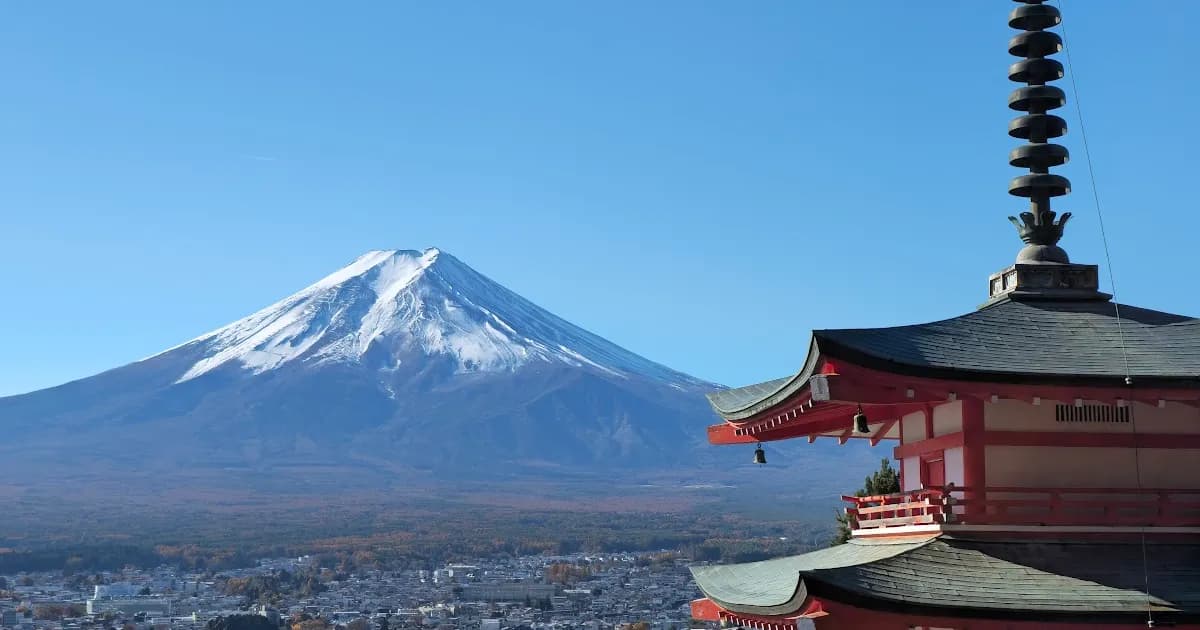
6. Mount Fuji from Chureito Pagoda, Yamanashi ★★★★★
The postcard shot: red pagoda, cherry blossoms, Mount Fuji. It's cliché because it's perfect.
Full disclosure: Fuji hides behind clouds about 60% of the time. Your odds improve in winter (cold air = clearer skies). The pagoda itself is worth seeing even without Fuji in the background, but let's be honest—you're here for the volcano.
Logistics:
- Cost: Free
- Access: Fujikyu Railway to Gero Station, then 20-min uphill walk (400 steps)
- Best time: Early April (cherry blossoms) or Nov-Feb (clearest Fuji views)
- Fuji visibility: Check Mount Fuji webcams before you commit to the trip
| Month | Fuji Visibility | Crowds | Cherry Blossoms |
|---|---|---|---|
| Jan-Feb | ★★★★★ 70% clear | Low | None |
| Mar | ★★★★☆ 60% clear | Medium | Late Mar only |
| Apr | ★★★☆☆ 50% clear | HIGH | Peak = insane |
| May-Aug | ★★☆☆☆ 30% clear | Medium | None |
| Sep-Nov | ★★★★☆ 60% clear | Low | Autumn leaves |
| Dec | ★★★★★ 70% clear | Low | None |
💡 Pro tip: If you're planning mount fuji trekking (climbing season July-Sept), skip Chureito. You can't see Fuji well from the summit, and summer visibility sucks anyway. Do the pagoda in winter, trek Fuji in summer.
7. Takachiho Gorge, Miyazaki Prefecture ★★★★☆
A volcanic gorge with 17-meter basalt cliffs and a waterfall you can row under. Southern Japan's answer to "why does everyone only visit Tokyo and Kyoto?"
This is Kyushu—the island most tourists skip. Their loss.
Logistics:
- Cost: ¥500 entry + ¥4,100 for boat rental (30 min, up to 3 people)
- Access: 90 min bus from Kumamoto, or rental car (parking ¥500). No convenient train option
- Time needed: 2-3 hours
- Best time: Avoid Golden Week and Obon (boat wait times hit 3+ hours). Weekday mornings = walk-on rentals
Real talk: The boat rental line can be brutal. If the wait's over an hour, skip it—the walking path along the gorge is 90% as scenic and free.
💡 Pro tip: Combine with Aso volcano and Beppu's japanese public baths (2 hours away). Make it a 3-day Kyushu loop. Way more interesting than spending another day in Osaka.
8. Hitachi Seaside Park, Ibaraki ★★★★☆
Blue nemophila flowers covering hills like someone spilled a paint bucket. Then it happens again in autumn with red kochia bushes.
This is a 200-hectare park that goes viral twice a year for good reason. The scale is absurd—entire hills carpeted in one color.
Logistics:
- Cost: ¥700 entry (varies by season)
- Access: Train to Katsuta Station + bus (40 min from Tokyo)
- Best time: Late April-early May (nemophila) or mid-Oct (kochia)
- Time needed: 3-4 hours (the park is huge—rent a bike at the entrance for ¥500)
Flower timing is specific:
- Nemophila (baby blue eyes): April 20 - May 10 (peak shifts ±5 days yearly)
- Kochia (red bushes): Oct 10 - Oct 25
💡 Pro tip: The park has bloom status updates in English. Don't show up outside peak—you'll see green grass and feel stupid. I've done it. It's not worth it.
Day trip from Tokyo: Yes, barely. Takes 2.5 hours each way. Leave Tokyo by 7am, back by 7pm.
9. Kinkaku-ji (Golden Pavilion), Kyoto ★★★★☆
A three-story temple covered in gold leaf sitting on a pond. Stupid pretty, stupidly crowded.
Is it touristy? Absolutely. Is it still worth seeing? Yeah, unfortunately.
Here's the move: This is a beautiful place in Japan where timing matters more than the destination. Go at opening (9am) or just before closing (4:30pm). Mid-day? You're fighting cruise ship groups for photos.
Logistics:
- Cost: ¥500
- Access: Bus #101 or #205 from Kyoto Station (40 min)
- Time needed: 45 minutes (one-way path, no backtracking)
- Best season: Autumn (Nov) or winter after snow (rare, but gorgeous)
💡 Pro tip: The entry ticket itself is a beautiful calligraphy charm (omamori). Keep it—it's worth the ¥500 alone.
Better gold temple alternative: Kinkaku-ji's silver sibling, Ginkaku-ji, is less shiny but way more peaceful. Plus the gardens are better. But if you only see one, yeah, go gold.
10. Kurobe Gorge Railway, Toyama ★★★★★
A one-hour open-air train ride through a gorge so deep you get vertigo looking down. The train was built for dam construction. Now it's for tourists who like their scenery with a side of "holy shit that's steep."
This is Toyama Prefecture—another spot most tourists skip. The train clings to cliffsides above the Kurobe River, through 20+ tunnels, past waterfalls and autumn leaves that look fake.
Logistics:
- Cost: ¥1,980 one-way to terminus (Keyakidaira)
- Access: Train to Unazuki Onsen Station (2 hrs from Kanazawa)
- Season: Late April - late November only (closed in winter—too much snow)
- Best time: Late Oct - early Nov (peak autumn colors)
- Time needed: Full day (round-trip train ride alone is 3 hours)
| Train Class | Cost | Experience | Worth It? |
|---|---|---|---|
| Regular car (open-air) | ¥1,980 | Windows are literal holes, cold, authentic | Yes |
| Relaxed car | ¥2,440 | Actual windows, heated | If over 60 or rainy |
| Special car | ¥3,180 | Large windows, reserved | Nah |
💡 Pro tip: Sit on the RIGHT side going out (left side coming back) for the best river views. Get to the station 30 min early to line up for seats—it's first-come, no reservations.
Combine with: Unazuki Onsen at the base—classic japanese public baths town. Soak after the train ride. Your knees will thank you.
11. TeamLab Borderless, Tokyo ★★★★★
An interactive digital art museum that's part rave, part zen garden, part acid trip without the acid.
This is the teamlab borderless mori building digital art museum—though they moved to a new location in Azabudai Hills in 2024 after closing the original Odaiba venue. Still the same mind-bending digital art installations where flowers dissolve when you touch them and rooms pulse with light.
Logistics:
- Cost: ¥3,800 adults (book online in advance—they sell out weeks ahead)
- Access: Kamiyacho Station, 5-min walk to Azabudai Hills
- Time needed: 2-3 hours (no set path, you wander)
- Best time: Weekdays, early afternoon (avoid opening and closing rushes)
Worth it? If you like art, tech, or getting photos that make your friends ask "where the hell is that?", yes. If you hate crowds and immersive experiences, skip it.
💡 Pro tip: The "Forest of Lamps" room has timed entry and fills up fast. Do that first, then explore backward through the museum. Everyone else does the opposite.
Not beautiful in the traditional sense, but it's on every "beautiful place in japan" list because it's impossible to describe and gorgeous in person.
12. Jigokudani Monkey Park, Nagano ★★★★☆
Wild snow monkeys soaking in natural hot springs. Yes, it's as ridiculous as it sounds.
These Japanese macaques figured out that hot springs feel amazing in winter. Now they're Instagram famous and don't care about humans at all.
Logistics:
- Cost: ¥800 entry
- Access: Train to Yudanaka Station + bus + 30-min uphill walk (2km). Wear good shoes—the path gets icy
- Best season: Dec-Mar (snow + monkeys in water = peak cuteness)
- Off-season: Monkeys still around, but in summer they don't use the hot springs much (because they're not cold)
- Time needed: 2-3 hours including hike
💡 Pro tip: The monkeys are most active 10am-2pm. Outside those hours, they're up in the forest and you'll see maybe 3-4 lounging around.
Photography note: They let you get close (like, 2 meters), but DO NOT TOUCH THEM. They're wild, not tame. They'll bite if provoked. That said, they mostly ignore humans, so just chill and shoot.
Access hack: This pairs perfectly with Nagano's ski resorts (40 min away). Do monkeys in the morning, ski in the afternoon.
How to Actually Plan This Without Losing Your Mind
You can't see all 12 in one trip. Well, you can, but you'll hate Japan and your feet will file for divorce Here's how to group them by region:
Kansai (Kyoto/Osaka base):
- Fushimi Inari, Kinkaku-ji (same city)
- Takeda Castle (day trip, 2.5 hours from Kyoto)
- Shirakawa-go (overnight trip from Kyoto via Kanazawa)
Time needed: 5-7 days
Tokyo area:
- Mount Fuji/Chureito Pagoda (day trip)
- Hitachi Seaside Park (day trip)
- TeamLab Borderless (half day)
Time needed: 3-4 days
Hokkaido (north):
- Biei Blue Pond
Time needed: 2-3 days (combine with Sapporo/Furano)
Kyushu (south):
- Takachiho Gorge
Time needed: 2-3 days (add Aso, Beppu for a proper loop)
Nagano/Toyama (central mountains):
- Jigokudani monkeys
- Kurobe Gorge
Time needed: 2-3 days
💡 Pro tip for first-timers: Pick ONE region outside Tokyo/Kyoto. Do that well. Come back later for the rest. Trying to hit all five regions in 10 days means you'll spend half your trip on trains.
The Japan Rail Pass Math: When It's Worth It
For beautiful place in japan, the JR Pass costs ¥50,000 for 14 days. Sounds expensive. But:
| Route | Regular Cost | With JR Pass | Savings |
|---|---|---|---|
| Tokyo → Kyoto (Shinkansen) | ¥13,320 | Free | ¥13,320 |
| Kyoto → Kanazawa → Shirakawa-go loop | ¥10,000+ | Free | ¥10,000 |
| Tokyo → Nagano (monkeys) | ¥8,000 | Free | ¥8,000 |
| Nagano → Toyama (Kurobe Gorge) | ¥7,000 | Free | ¥7,000 |
| TOTAL | ¥38,320+ | ¥0 | Pays for itself |
Get the pass if: You're hitting 3+ of these regions. Don't get it if you're staying in Tokyo/Kyoto only—city transport isn't covered.
Regional passes alternative: JR West offers Kansai passes (¥12,000 for 5 days) if you're only doing Kyoto/Osaka/Hiroshima
What Nobody Tells You About Visiting Beautiful Places in Japan
1. "Beautiful" means different things depending on season.
Cherry blossoms last 7-10 days per location. Autumn leaves? 2-3 weeks. Snow coverage? Totally unpredictable. If you're coming for ONE specific thing (nemophila at Hitachi, clouds at Takeda), have backup plans.
2. Photos lie about crowds.
Every beautiful place in Japan looks empty on Instagram. Know why? Because someone woke up at 5am or Photoshopped out 40 people. If you show up at 11am on Saturday, you're not getting that shot.
3. Access matters more than distance.
Biei Blue Pond is only 150km from Sapporo. But it takes 3+ hours because rural buses run twice a day. Meanwhile, Kyoto to Osaka is 50km and takes 28 minutes. Google For beautiful place in japan, this is worth knowing.Maps lies about "nearby" attractions in rural Japan 4. Entrance fees add up.
Most temples/parks charge ¥500-800. Do 3-4 per day for 10 days? That's ¥15,000-30,000 just in admissions. Budget for it.
Daily Budget Breakdown for Beautiful Places Tour
| Category | Budget | Mid-Range | Splurge |
|---|---|---|---|
| Accommodation | ¥3,000 (hostels/guesthouses) | ¥8,000 (business hotels) | ¥18,000+ (ryokan) |
| Food | ¥2,000 (convenience stores + cheap ramen) | ¥4,000 (casual restaurants) | ¥8,000+ (nice meals) |
| Transport | ¥2,000 (local trains/buses) | ¥3,500 (JR Pass daily average) | ¥5,000 (taxis + trains) |
| Admissions | ¥1,500 (2-3 sites) | ¥2,500 (3-4 sites + activities) | ¥5,000 (everything + experiences) |
| Total/Day | ¥8,500 (~$65 USD) | ¥18,000 (~$130 USD) | ¥36,000+ (~$260+ USD) |
Real talk: Japan's not cheap, but it's way more affordable than people think if you skip taxis and don't eat every meal in Michelin-starred places Best money-saver: Convenience store breakfasts (¥300-500) and standing sushi bars for lunch (¥1,000-1,500). Save splurges for dinner.
My Honest Ranking If You Only Have 7 Days
- Fushimi Inari (Kyoto) — Non-negotiable. Go.
- Shirakawa-go — Stay overnight. Do it right.
- Mount Fuji from Chureito — If it's clear. Check the webcams first.
- Kurobe Gorge OR Jigokudani Monkeys (pick one, both is a detour)
- TeamLab Borderless — Because it's unique to Japan
- Takeda Castle — Only if you're an overachiever or a photographer
Skip the rest for trip #2. Japan rewards repeat visits way more than trying to "see everything" once.
Planning More Travel?
For beautiful place in japan, if Japan's got you hooked on Asia, Korea's only 2 hours away by flight—same mountain/temple/tech vibe, half the tourists. Or check out more destination breakdowns on our US site for trip planning strategies that actually work. Heading west after this? Europe guides are here.
FAQ
Q. When is the best time to see beautiful places in Japan?
Late October to early December is the cheat code. Autumn leaves peak, crowds drop after summer, weather's stable, and visibility for Mount Fuji hits 60-70%. Spring (late March-April) is second best for cherry blossoms, but way more crowded and hotels cost 30% more. Summer (June-August) is hot, humid, and rainy—skip unless you're climbing Fuji. Winter (Dec-Feb) is criminally underrated: clear skies, snow scenes, fewer tourists, but some rural spots close.
Q. Is the Japan Rail Pass worth it for visiting these places?
Yes, if you're doing more than a Tokyo-Kyoto-Osaka loop. The 7-day pass costs ¥29,650. A single Tokyo-Kyoto shinkansen round-trip costs ¥26,640. Add one more long-distance trip (to Nagano, Kanazawa, Takayama) and you've saved money. The pass covers JR trains including most shinkansen, but NOT highway buses (so Shirakawa-go bus from Kanazawa isn't included). If you're only staying in one region, skip it—local day passes are cheaper.
Q. Can I visit beautiful places in Japan without speaking Japanese?
Absolutely, but download Google Translate and have offline maps. Major tourist spots (Kyoto, Tokyo, Hakone) have English signage and staff. Rural spots (Takeda, Takachiho, Biei) have minimal English, but transport and entry points are manageable with gestures and translation apps. The real issue isn't language—it's knowing when buses run and where trailheads are. Download timetables as photos before you go.
Q. How far in advance should I book tickets for TeamLab Borderless?
3-4 weeks minimum, longer if visiting during holidays. TeamLab uses timed entry tickets that sell out fast, especially weekends and school vacation periods (late July-August, late March-April, Golden Week). Book directly through their website the moment your Japan dates are set. If sold out, check again 3-4 days before your date—cancellations pop up. Walk-up tickets are basically mythical.
Q. Are these places accessible for elderly visitors or people with mobility issues?
Some yes, some hell no. Fully accessible: Kinkaku-ji (paved paths), TeamLab (flat, though dark), Hitachi Seaside Park (rent a bike or take the park shuttle). Moderate difficulty: Shirakawa-go (some hills but manageable), Biei Blue Pond (short walks, paved). Hard pass: Fushimi Inari (400m elevation gain, stairs), Takeda Castle (steep mountain access), Jigokudani (2km uphill trail, uneven/icy), Chureito Pagoda (397 steps, no elevator). Most temples h For i found 12 beautiful places in japan (skip #4), this is worth knowing.ave some stairs—Japan isn't great at accessibility outside major cities.