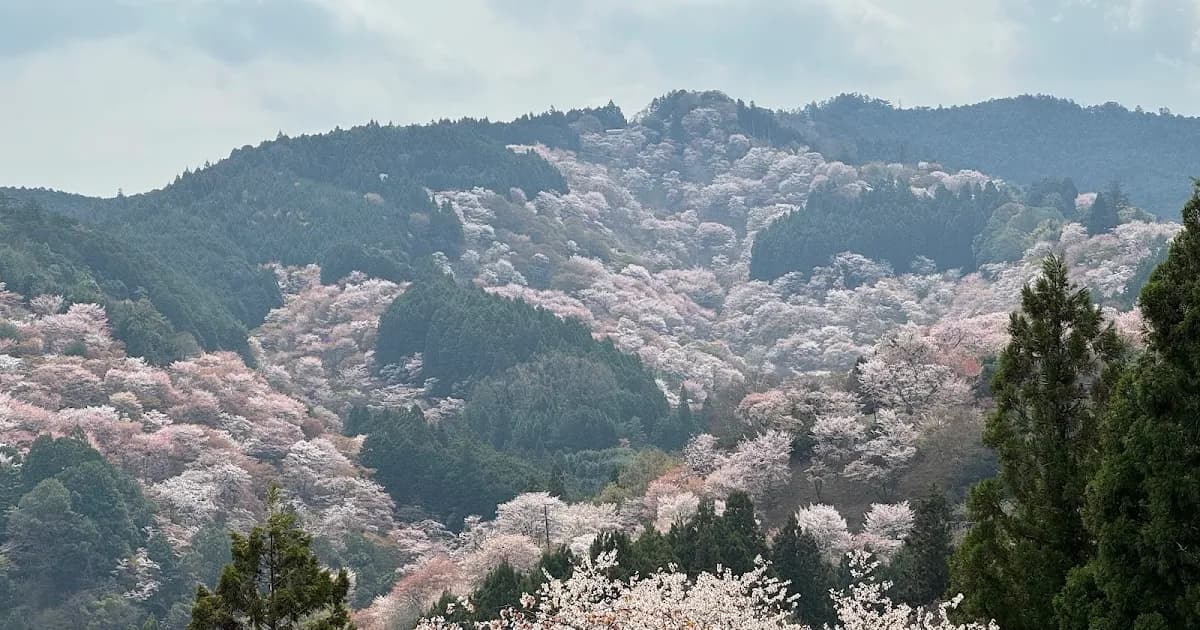
Mount Yoshino: I Hiked 1,000 Cherry Trees (Tired AF)
Mount Yoshino Nara is worth the climb — if you time it right. Japan's most famous cherry blossom mountain has 30,000 trees across four viewing zones, but you'll walk 5-8 hours and fight crowds during peak season (early April). Go early morning or late season for the best experience.
I spent a full day hiking Mount Yoshino last spring. My legs hurt for three days. But holy shit, those cherry blossoms.
Here's everything you need to know before you go — from someone who learned the hard way.
| Quick Snapshot | Details |
|---|---|
| Best Time | Late March - mid April (cherry blossoms); avoid first week of April |
| Time Needed | Full day (6-8 hours with breaks) |
| Difficulty | Moderate to hard — steep climbs, lots of stairs |
| Cost | ¥3,000-¥5,000 ($20-35) including transport, food, temple fees |
| Worth It? | ★★★★★ if you go off-peak; ★★★☆☆ during peak crowds |
| Skip If | You can't handle stairs or hate crowds |
Why Mount Yoshino Isn't Just Another Cherry Blossom Spot
For mount yoshino nara, mount Yoshino in Nara Prefecture has been Japan's top sakura destination for over 1,000 years. Not because it's easy to reach. Not because it's Instagram-friendly (though it is). But because 30,000 cherry trees blanket the mountainside in four distinct zones called "senbon" (thousand trees).
The blooms cascade down the mountain over two weeks. Lower areas bloom first, then mid-mountain, then upper mountain. If you time it right, you'll see all four zones in peak bloom on the same day.
But here's what the tourism brochures don't tell you: Mount Yoshino Nara is exhausting. The climb from the base to the upper viewing area covers 600 vertical meters (2,000 feet) of stairs and steep paths. I'm reasonably fit and I was gasping by the third zone.
Also, during peak season (first week of April), you'll share those trails with 50,000+ visitors per day. The Yoshino-Kumano National Park is a UNESCO World Heritage site, which means tourist buses from Osaka, Kyoto, and beyond.
💡 Pro tip: Go on a weekday in late March or late April. You'll see 80% of the blossoms with 20% of the crowds.
Gear for This Trip
The only daypack you need. Lightweight, durable, fits everything.
Packing cubes that changed how I travel. Essential for multi-city trips.
Best noise cancelling earbuds for flights and loud restaurants.
Hard shell, spinner wheels, fits every overhead bin. No checked bags.
As an Amazon Associate I earn from qualifying purchases.
Getting to Mount Yoshino From Nara, Osaka, or Kyoto
For mount yoshino nara, mount Yoshino Nara is remote. That's the point — it's been a sacred mountain for Shugendo Buddhism for centuries. But getting there requires patience.
From Nara City (1.5 hours)
Route: Nara → Kashihara-Jingumae Station (Kintetsu Nara Line) → Yoshino Station (Kintetsu Yoshino Line)
- Cost: ¥950 ($6.50) one way
- Time: 1 hour 20 minutes
- Trains run: Every 30-60 minutes; check the Kintetsu Railway timetable
From Yoshino Station, you can either walk uphill (30 minutes, steep) or take the cable car (¥450, 3 minutes). I walked down and took the cable car up. My knees thanked me.
From Osaka or Kyoto (2-2.5 hours)
Take the Kintetsu Line directly to Yoshino. No JR Pass coverage here — Kintetsu is a private railway
- Osaka (Namba): ¥1,560 ($11), 1 hour 30 minutes direct on Limited Express
- Kyoto: ¥2,050 ($14), 2 hours (transfer at Kashihara-Jingumae)
💡 Pro tip: If you're visiting during sakura season, book Limited Express seats in advance. Regular trains get packed standing-room-only by 8 AM.
| Route | Cost | Time | Transfers |
|---|---|---|---|
| Nara → Yoshino | ¥950 | 1h 20m | 1 |
| Osaka → Yoshino | ¥1,560 | 1h 30m | 0 (Limited Express) |
| Kyoto → Yoshino | ¥2,050 | 2h | 1 |
The Four Viewing Zones: What to Expect
For mount yoshino nara, mount Yoshino's cherry blossoms are divided into four areas, each with its own vibe and difficulty level. You don't have to do all four — but if you're here, you might as well.
Shimo-Senbon (Lower Thousand) ★★★☆☆
Elevation: 250-350m Walk from station: 10-15 minutes Difficulty: Easy
This is where most people stop. It's closest to the station, has the most restaurants and shops, and requires minimal climbing. The cherry blossoms here are dense and frame traditional streets lined with old wooden buildings.
Crowds: Packed during peak season. Like, shoulder-to-shoulder packed.
I recommend using this zone as your lunch spot, not your main viewing area. Grab kuzumochi (arrowroot mochi, a Yoshino specialty) and keep moving.
Naka-Senbon (Middle Thousand) ★★★★☆
Elevation: 350-470m Walk from Shimo-Senbon: 20-30 minutes Difficulty: Moderate (stairs start here)
This is where things get good. Fewer tourists (they gave up), better views, and the cherry blossoms stretch across hillsides instead of just lining streets.
You'll pass Yoshimizu Shrine and Kinpusen-ji Temple (entrance ¥500, worth it for the massive wooden hall). The temple's grounds have some of the oldest cherry trees on the mountain — 400+ years old.
💡 Pro tip: Stop at one of the tea houses along this section. Order amazake (sweet sake) and sakura mochi. Sit outside. This is the Japan you came for.
Kami-Senbon (Upper Thousand) ★★★★★
Elevation: 470-600m Walk from Naka-Senbon: 30-40 minutes Difficulty: Hard (steep, relentless stairs)
Only about 30% of visitors make it here. Their loss.
The upper thousand has the best panoramic views — you can see all three lower zones spreading out below you, a literal ocean of pink and white blossoms. On clear days, you can see across Nara Prefecture.
The trees here bloom a few days later than lower zones, so if you're visiting mid-season, this is where the freshest blossoms are.
Oku-Senbon (Inner Thousand) ★★★☆☆
Elevation: 600-750m Walk from Kami-Senbon: 40-60 minutes Difficulty: Hard
Honestly? I skipped this on my trip. By the time I hit Kami-Senbon, I was wrecked. Oku-Senbon is more sparse — fewer trees, more forest hiking. Go if you're a completionist or want total solitude.
| Zone | Elevation | Walking Time from Station | Crowd Level | My Rating |
|---|---|---|---|---|
| Shimo-Senbon | 250-350m | 15 min | ★★★★★ packed | ★★★☆☆ |
| Naka-Senbon | 350-470m | 30-45 min | ★★★★☆ busy | ★★★★☆ |
| Kami-Senbon | 470-600m | 60-90 min | ★★☆☆☆ moderate | ★★★★★ |
| Oku-Senbon | 600-750m | 100-150 min | ★☆☆☆☆ quiet | ★★★☆☆ |
When to Visit: Timing Your Cherry Blossom Window
For mount yoshino nara, the cherry blossom forecast for Mount Yoshino Nara changes every year, but the pattern is predictable: late March to mid-April, with peak bloom usually April 1-10.
But "peak bloom" doesn't mean "best time to visit."
Early Season (Late March)
Pros: Fewer crowds, lower zone in full bloom, fresh energy Cons: Upper zones might be bare or just budding
If you hate crowds more than you love perfect blooms, come late March. Shimo-Senbon and Naka-Senbon will be beautiful. Kami-Senbon will be hit or miss.
Mid Season (April 1-5)
Pros: All four zones in bloom simultaneously (if you're lucky), maximum impact Cons: 50,000+ people per day, sold-out accommodations, chaos
This is when I went. It was gorgeous. It was also a goddamn zoo. I spent more time waiting for photo angles to clear than actually enjoying the blossoms.
Late Season (April 6-15)
Pros: Crowds thin out, upper zones still beautiful, locals return Cons: Lower zones past peak, some petals already fallen
The smart move. You'll still see gorgeous blossoms — especially in Kami-Senbon and Oku-Senbon, which bloom later. But you'll actually have space to breathe.
💡 Pro tip: Check the Japan Meteorological Corporation sakura forecast two weeks before your trip. They update bloom predictions daily.
What to Eat: Yoshino's Food Specialties
For mount yoshino nara, mount Yoshino Nara isn't just about cherry blossoms. Mount Yoshino Nara has been a pilgrimage site for 1,300 years, which means temple food culture.
Kuzumochi (葛餅) ★★★★★
Arrowroot starch jelly covered in kinako (roasted soybean powder) and kuromitsu (black sugar syrup). It's chewy, slightly sweet, and wildly refreshing after climbing stairs for two hours.
Yoshino is Japan's top producer of kuzu (arrowroot). Every shop sells it. I tried three versions. The best was at Hozanen (¥400), a small tea house in Naka-Senbon.
Kakinoha-zushi (柿の葉寿司) ★★★★☆
Sushi wrapped in persimmon leaves. The leaves are slightly pickled and add a subtle flavor to the mackerel or salmon. You don't eat the leaves — they're just packaging.
It's a preserved food from the days when pilgrims climbed Mount Yoshino without refrigeration. Now it's a regional delicacy. Grab a box (¥800-1,200) from a shop near Yoshino Station and eat it on the trail.
Sakura Ice Cream ★★★☆☆
Every tourist trap sells this. It's fine. Pink-tinted soft serve with a hint of sakura flavor. Worth it once for the novelty, but honestly, get kuzumochi instead.
Where to Eat
Restaurants are scarce on Mount Yoshino Nara. Most of what you'll find are small tea houses and snack stalls. Bring backup snacks.
- Tsurube-zushi (つるべすし): Traditional restaurant in Shimo-Senbon. Kakinoha-zushi sets start at ¥1,800. Reservations recommended during sakura season. Check here
- Hozanen (萌山園): Tea house in Naka-Senbon. Kuzumochi, amazake, light meals. ¥400-800 per item.
- Convenience stores: There's a small shop near Yoshino Station. Stock up before you climb.
💡 Pro tip: Pack a bento from Nara or Osaka. There are picnic spots with views in Naka-Senbon and Kami-Senbon. Way better than fighting for a restaurant seat.
Should You Stay Overnight on Mount Yoshino?
For mount yoshino nara, short answer: Only if you want a spiritual experience or you're doing serious hiking beyond the cherry blossom zones.
Most visitors (including me) do Mount Yoshino as a day trip from Nara, Osaka, or Kyoto. You can see the main zones, eat, and get back to a city hotel by 8 PM.
But staying overnight has perks:
- Sunrise views: The mountain at dawn is magical. Zero crowds, mist over the cherry blossoms, total silence except for temple bells.
- Shukubo (temple lodging): Mount Yoshino has several Buddhist temples offering overnight stays with vegetarian meals and morning prayers. It's not a hotel — it's a cultural immersion. Expect futons, shared baths, and early wake-up calls.
Shukubo Options
- Chikurin-in (竹林院): The most famous temple lodging on Mount Yoshino. Traditional rooms, garden views, kaiseki-style meals. ¥15,000-20,000 per person with two meals. Book here
- Kimpusenji Shukubo: Simpler, cheaper (¥8,000-12,000), more austere. Great if you want an authentic temple experience without luxury.
If you just want a regular hotel, stay in Kashihara-Jingumae Station (halfway between Nara and Yoshino). Hotels run ¥6,000-10,000 per night, and you'll save an hour of travel time in the morning.
My One-Day Itinerary for Mount Yoshino
For mount yoshino nara, here's what worked for me. Adjust based on your fitness level and crowd tolerance.
| Time | Activity | Notes |
|---|---|---|
| 7:00 AM | Depart Nara | Early train to beat crowds |
| 8:30 AM | Arrive Yoshino Station | Grab snacks, use bathroom |
| 8:45 AM | Cable car to Shimo-Senbon | ¥450, saves energy for later |
| 9:00 AM | Walk through Shimo-Senbon | Quick browse, don't linger |
| 9:30 AM | Kinpusen-ji Temple | ¥500 entrance, worth it |
| 10:30 AM | Tea break in Naka-Senbon | Kuzumochi + rest |
| 11:30 AM | Climb to Kami-Senbon | Slow pace, lots of photo stops |
| 1:00 PM | Lunch at Kami-Senbon viewpoint | Packed bento |
| 2:00 PM | Explore Kami-Senbon | Best views here |
| 3:30 PM | Descend to Naka-Senbon | Downhill is faster but hard on knees |
| 4:30 PM | Souvenir shopping in Shimo-Senbon | Kuzu snacks, persimmon products |
| 5:30 PM | Return to Yoshino Station | Walk downhill, skip cable car line |
| 6:00 PM | Train back to Nara | Collapse into seat |
Total walking time: 5-6 hours including breaks. Total steps: Around 25,000 (my watch data).
💡 Pro tip: Start early. I mean really early. The first cable car leaves at 8:20 AM. Be on it. By 11 AM, the trails feel like rush hour in Tokyo.
What Nobody Tells You: The Hard Parts
For mount yoshino nara, mount Yoshino Nara is gorgeous, but it's not easy. Here's what I wish someone had told me.
The Stairs Are No Joke
We're talking hundreds of stone steps, often uneven, sometimes steep. If you have bad knees or limited mobility, this hike will suck. The cable car only gets you past the first 10% of elevation gain.
Bring trekking poles if you have them. Wear proper hiking shoes — I saw people in heels (WHY?!) struggling and miserable.
Crowds Kill the Vibe
During peak bloom, Mount Yoshino feels more like a theme park than a nature retreat. Buses disgorge tour groups every 20 minutes. The narrow trails bottleneck. The tea houses run out of food by noon.
If you're going during peak season, manage expectations. It's still beautiful, but it's not peaceful.
The Descent Destroys Your Knees
Everyone focuses on the climb. Nobody warns you that walking downhill for an hour on stone steps is brutal. My quads were screaming by the time I reached the station.
Take breaks. Walk slowly. Or pay ¥450 for the cable car down if you're wrecked.
Bathrooms Are Limited
There are public toilets near the station, at Kinpusen-ji Temple, and at a few spots in Naka-Senbon. That's it. Plan accordingly. Lines get long during peak hours.
Combining Mount Yoshino With Nara Deer Park
For mount yoshino nara, a lot of first-timers ask if they can "do both" — Mount Yoshino and Nara Park (the famous deer park in Nara city) in one day.
Short answer: No. Not comfortably.
Mount Yoshino is a full-day commitment. If you try to squeeze in Nara deer park in japan, you'll either rush the mountain (and miss the best zones) or arrive at Nara Park exhausted and over it.
Better plan: Dedicate one day to Mount Yoshino Nara, and another day to nara koen park and Todai-ji Temple. Nara Park deserves at least a half day if you want to explore beyond feeding the deer.
If you only have one day total, prioritize based on season:
- Cherry blossom season (late March-mid April): Mount Yoshino wins. The deer park in nara japan is pretty year-round; the cherry blossoms aren't.
- Any other time: Nara Park. Mount Yoshino is still nice for hiking, but without the cherry blossoms, it's just a mountain.
Cost Breakdown: How Much to Budget
For mount yoshino nara, here's what I spent on my full-day trip to Mount Yoshino from Nara city:
| Item | Cost (¥) | Cost ($) |
|---|---|---|
| Train (round trip) | ¥1,900 | $13 |
| Cable car (one way) | ¥450 | $3 |
| Kinpusen-ji Temple entrance | ¥500 | $3.50 |
| Kuzumochi + tea | ¥600 | $4 |
| Kakinoha-zushi lunch | ¥1,200 | $8 |
| Snacks/drinks | ¥800 | $5.50 |
| Souvenirs | ¥1,500 | $10 |
| Total | ¥6,950 | $47 |
If you're coming from Osaka or Kyoto, add ¥1,200-2,000 ($8-14) in extra train costs.
For budget travelers: skip the souvenirs and temple entrance, bring your own lunch. You can do this trip for under ¥3,000 ($20).
For comfort travelers: book a temple stay (¥15,000+) or splurge on a traditional kaiseki meal in Yoshino village (¥5,000-8,000).
What to Pack for Mount Yoshino
For mount yoshino nara, this is a mountain hike, not a stroll through Kyoto. Pack accordingly.
Must-haves:
- Comfortable hiking shoes — Not negotiable. Stone steps + 6 hours = blisters in sneakers.
- Water bottle — Bring at least 1 liter. Vending machines exist but are sparse in upper zones.
- Sunscreen — You're at elevation with limited shade in some spots. I got fried.
- Hat or cap — Same reason.
- Light jacket — Even in April, mornings are chilly at elevation.
Nice-to-haves:
- Trekking poles — Especially if you're doing all four zones or have knee issues.
- Portable battery — You'll take a million photos. Your phone will die.
- Small backpack — For snacks, water, layers.
If you're a photographer, bring a real camera. Phone cameras work, but the panoramic views from Kami-Senbon deserve better. Golden hour (late afternoon) lights up the blossoms perfectly.
FAQ
Q. Is Mount Yoshino Nara worth visiting outside of cherry blossom season?
Yeah, but it's a totally different experience. In summer, the mountain is lush and green — great for hiking but not especially photogenic. Autumn (late October-November) brings fall foliage, which is beautiful but less famous than the cherry blossoms. Winter is quiet and cold; most tea houses close.
If you're in Nara outside of sakura season and love hiking, Mount Yoshino is a solid day trip. But if you're prioritizing limited vacation days, save it for spring.
Q. Can kids or elderly people manage the Mount Yoshino hike?
Depends on their fitness level. The lower zone (Shimo-Senbon) is totally manageable — minimal stairs, paved paths, close to the station. Naka-Senbon is doable for active kids and reasonably fit elderly people, but expect to take breaks.
Kami-Senbon and Oku-Senbon? Skip them if mobility is limited. The stairs are relentless. I saw elderly Japanese hikers crushing it, but they clearly hike mountains regularly. If you're unsure, just enjoy Shimo-Senbon and Naka-Senbon. Still beautiful.
Q. Are there English signs on Mount Yoshino?
Some. Major temples and intersections have English signage, but it's inconsistent. The trails are fairly straightforward — you're basically walking uphill the whole way — so getting lost is hard.
Download an offline map (Maps.me works well) or screenshot the trail map from the Yoshino Tourism Association website before you go. Cell service can be spotty in the upper zones.
Q. How does Mount Yoshino compare to Mount Fuji for hiking?
Completely different. Mount Fuji is a serious multi-day alpine trek requiring permits, mountain huts, and real mountaineering prep. Mount Yoshino Nara is a day hike on established trails with tea houses and bathrooms. No special gear or permits needed.
If you want cherry blossoms and accessible mountain views, Mount Yoshino wins. If you want to summit an iconic peak and test your endurance, mount fuji trek is the challenge. You can read more about Japan's most famous mountains at Japan Guide.
Q. What's the best camera spot on Mount Yoshino?
The viewpoint at Hanayagura in Kami-Senbon. You get a sweeping panorama of all three lower zones covered in cherry blossoms, with traditional village buildings dotting the hillside. It's iconic — you've seen this photo even if you don't know it.
Go late afternoon (4-5 PM) for the best light. The crowds thin out by then too.
Final Take: Is Mount Yoshino Nara Worth the Effort?
Yes — but only if you go with realistic expectations.
Mount Yoshino is not a relaxing stroll. It's a full-body workout disguised as a cherry blossom viewing. You'll climb hundreds of stairs, sweat through your shirt, and question your life choices around the third zone.
But holy shit, those views.
If you love hiking, don't mind crowds, and want to see Japan's most famous sakura spot, Mount Yoshino Nara is absolutely worth it. Just go early, pace yourself, and maybe do some squats before your trip.
If you hate crowds, have mobility issues, or prefer easier access to cherry blossoms, stick to Kyoto's temples or the deer park in nara japan. No shame in that.
For me? I'd go back. But next time, I'm staying overnight and catching sunrise from Kami-Senbon. And bringing better hiking boots.
Planning More Travel?
For mount yoshino nara, done with Japan? Korea is just 2 hours away — check out Travel Plan Korea for Seoul guides, Jeju hiking, and Korean food deep dives.
Heading west? Travel Plan EU has city guides for Europe's best (and most overrated) destinations.
And for more Japan tips, trail breakdowns, and honest takes on tourist traps, browse Travel Plan US for our North America coverage — including canada rocky mountains and whistler mountain bc guides if you're craving more mountain adheads.