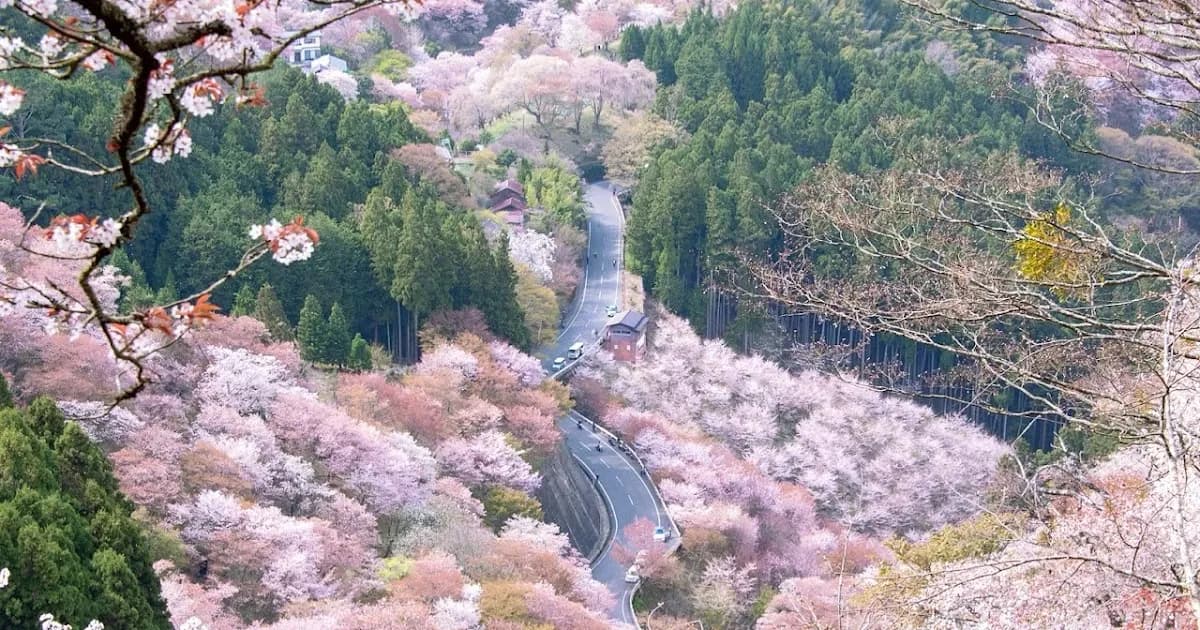
Mount Yoshino: I Climbed 1000 Cherry Trees (Here's Why)
Mount Yoshino Japan is home to 30,000 cherry trees across four altitude zones — meaning you can catch blooms for nearly a month if you time it right. I spent three days here during peak season and another visit in autumn, and honestly? Mount Yoshino Japan ruined every other cherry blossom spot for me For mount yoshino: i climbed 1000 cherry trees (here's why), this is worth knowing. Most tourists blow their entire Japan trip on Tokyo's crowded Ueno Park or Kyoto's shoulder-to-shoulder Philosopher's Path. Mount Yoshino (吉野山, Yoshinoyama) gives you something better: temple-hopping through actual mountains blanketed in sakura, with room to breathe.
Here's everything you need: when to go, how much it costs, which trails to take, and why sleeping on the mountain changes the entire experience.
| Mount Yoshino Quick Facts | |
|---|---|
| Best for | Cherry blossoms (spring), fall foliage, temple trails, overnight temple stays (shukubo) |
| Peak bloom | Early-mid April (but varies by altitude) |
| Daily budget | ¥8,000-¥15,000 ($53-$100) |
| Time needed | 1-2 days minimum, 3 days ideal |
| Skip if | You hate crowds during sakura season, can't handle hills |
| From Osaka | 1.5-2 hours, ¥1,680 one-way |
| From Kyoto | 2-2.5 hours, ¥2,120 one-way |
| Verdict | ★★★★★ (5/5) — Best cherry blossom experience in Japan |
Why Mount Yoshino Beats Every Other Cherry Blossom Spot
For mount yoshino japan, i've done the Tokyo-K For mount yoshino: i climbed 1000 cherry trees (here's why), this is worth knowing.yoto cherry blossom circuit. I've done Nara Park Japan. Mount Yoshino is different.
The mountain has four viewing zones (四本桜, shibon-zakura) at different elevations. Lower Senbon (下千本), Middle Senbon (中千本), Upper Senbon (上千本), and Inner Senbon (奥千本). "Senbon" literally means "1,000 trees" — but it's more like 30,000 total Here's what this means: blooms cascade up the mountain over 3-4 weeks. When Lower Senbon peaks, Middle is just starting. When Middle peaks, Upper is budding. You're not gambling on a single weekend like in Tokyo.
💡 Pro tip: Check the official Yoshino Town website for real-time bloom updates. They post daily photos from each zone.
| Cherry Blossom Zone | Elevation | Peak Timing | Crowd Level | Best For | |---|---|---|---| | Lower Senbon (下千本) | 230m | Early April | ★★★★★ (packed) | Quick visits, cable car access | | Middle Senbon (中千本) | 370m | Mid April | ★★★★ (busy) | Main temples, most services | | Upper Senbon (上千本) | 600m | Late April | ★★★ (moderate) | Better views, fewer tourists | | Inner Senbon (奥千本) | 750m | Latest April | ★★ (quiet) | Serious hikers, solitude |
The other reason Mount Yoshino Japan wins: It's not just cherry For mount yoshino: i climbed 1000 cherry trees (here's why), this is worth knowing. blossoms. You're walking between UNESCO World Heritage temples, ancient pilgrimage trails, and mountain shrines. Even without sakura, Mount Yoshino Japan is gorgeous.
I visited again in November for fall foliage. The maple trees (momiji) turn the mountain red-gold. Almost zero tourists. Same temples, same trails, totally different vibe.
Gear for This Trip
The only daypack you need. Lightweight, durable, fits everything.
Packing cubes that changed how I travel. Essential for multi-city trips.
Best noise cancelling earbuds for flights and loud restaurants.
Hard shell, spinner wheels, fits every overhead bin. No checked bags.
As an Amazon Associate I earn from qualifying purchases.
Getting to Mount Yoshino From Osaka, Kyoto, Tokyo
For mount yoshino japan, mount Yoshino is in Nara Prefecture, about 90 minutes south of Osaka. There's no JR line here, so your Japan Rail Pass won't work.
From Osaka (Fastest Route)
Osaka Abenobashi → Yoshino Station via Kintetsu Railway.
- Direct Limited Express (特急, tokkyū): 1 hour 20 minutes, ¥1,680 ($11.50)
- Local train: 1.5-2 hours, ¥950 ($6.50), 1-2 transfers
I always take the Limited Express. It's comfortable, has reserved seats, and runs every 30-60 minutes. Buy tickets at Kintetsu ticket counters or machines (no advance booking needed unless it's peak sakura season).
💡 Pro tip: If you have a JR Japan Rail Pass, take JR to Yoshinoguchi Station (different station), then transfer to Kintetsu local train (15 min, ¥230). Total time is longer (2+ hours) but saves ¥1,000+ if you're already using the JR Japan Pass for other trips.
From Kyoto
Kyoto → Yamato-Saidaiji (transfer) → Yoshino Station via Kintetsu.
- Total time: 2-2.5 hours
- Cost: ¥2,120 ($14.50) Limited Express, ¥1,380 ($9.50) local
Take the Kintetsu Kyoto Line to Yamato-Saidaiji, transfer to the Kintetsu Yoshino Line. The Limited Express skips most stops and cuts 30 minutes off your trip.
From Tokyo
Tokyo → Kyoto (Shinkansen) → Yoshino (Kintetsu).
- Total time: 4-5 hours
- Cost: ¥13,320+ ($90) if not using rail pass japan
The Shinkansen to Kyoto is covered by the JR Japan Rail Pass, but the Kintetsu leg isn't. If you're staying in Kyoto or Osaka for a few days, Mount Yoshino makes a perfect day trip or overnight excursion.
Yoshino Station to the Mountain: Cable Car, Bus, or Walk
For mount yoshino japan, once you arrive at Yoshino Station (吉野駅), you're still at the base. The temples and cherry trees are uphill. You have three options.
Option 1: Cable Car (Ropeway)
Senyō-ji Cable (千本口駅 → 吉野山駅) runs from near Yoshino Station to Yoshinoyama Station, halfway up Lower Senbon.
- Time: 3 minutes
- Cost: ¥450 one-way ($3), ¥800 round-trip ($5.50)
- Frequency: Every 15-20 minutes
This is the oldest cable car in Japan (built 1929). It's tiny, creaky, and honestly kind of nice. Most tourists take this.
💡 Pro tip: During peak sakura season (especially weekends), the cable car line can hit 60+ minute waits. I've seen it. If the queue looks insane, just walk. It's only 15 minutes uphill.
Option 2: Walk
From Yoshino Station, follow the road uphill for 15-20 minutes to reach Yoshinoyama Station (where the cable car drops you off). It's paved, not steep, and you'll see cherry trees along the way.
I prefer walking. You skip the line, get a warm-up, and honestly? The views start immediately.
Option 3: Shuttle Bus
During peak season, temporary shuttle buses run from Yoshino Station to Middle Senbon (中千本).
- Cost: ¥500-¥700 ($3.50-$5)
- Time: 10-15 minutes
Only runs March-April when blossoms are on. If you're staying overnight at a temple lodge (shukubo) in Middle or Upper Senbon, this saves your legs.
Mount Yoshino's Four Zones: Where to Go, What to See
For mount yoshino japan, the mountain is divided into four "Senbon" zones, each with distinct temples, trails, and bloom timing. Here's how to tackle them.
Lower Senbon (下千本, Shimo-Senbon)
Elevation: 230m | Blooms: Early April | Crowds: Heaviest
This is where the cable car drops you and where most day-trippers turn around. You'll find souvenir shops, restaurants, and the famous Kinpusen-ji Temple (金峯山寺), one of the largest wooden structures in Japan.
What to see:
- Kinpusen-ji Zaō-dō Hall: ¥800 entry ($5.50). The main hall is massive — 34 meters tall, dark wood, imposing. Inside are three blue guardian deities (Zaō Gongen) that are only displayed during special spring (April) and autumn (October-November) periods.
- Yoshimizu Shrine (吉水神社): ¥600 entry ($4). This was a temple turned Shinto shrine with incredible views of Middle Senbon's cherry trees. The tatami room where samurai Minamoto no Yoshitsune allegedly hid in the 12th century is still there.
Food: Lower Senbon has the most restaurants. Kaki no Ha Zushi (柿の葉寿司) — sushi wrapped in persimmon leaves — is the local specialty. Try Hirasō (平宗) (¥1,200-¥2,000 sets, $8-$14).
Middle Senbon (中千本, Naka-Senbon)
Elevation: 370m | Blooms: Mid April | Crowds: Heavy but manageable
This is the heart of Mount Yoshino Japan. Most temples, lodges, and the best cherry blossom density are here. If you're staying overnight, it'll likely be in this zone.
What to see:
- Nyoirin-ji Temple (如意輪寺): Free entry to grounds, ¥500 ($3.50) for inner hall. This temple has a gorgeous pagoda and the grave of Emperor Go-Daigo. The view from the hillside cemetery is hauntingly beautiful during sakura season.
- Chikurin-in Temple (竹林院): ¥600 garden entry ($4). Japanese garden with 1,000-year-old trees. You can have tea (¥300 extra) while overlooking the garden.
Food: Try Hatsune (初音), a traditional restaurant serving yakimochi (grilled rice cakes) and tempura sets (¥1,500-¥2,500, $10-$17). Sit on tatami, overlook the valley.
💡 Pro tip: If you're doing a day trip, Middle Senbon is where to spend most of your time. It's the sweet spot of temples, views, and sakura density without the insane Lower Senbon crowds.
Upper Senbon (上千本, Kami-Senbon)
Elevation: 600m | Blooms: Late April | Crowds: Light
The trail from Middle to Upper Senbon takes 30-40 minutes uphill. The crowds thin out dramatically. You'll see more hikers than tour groups.
What to see:
- Hanayagura Observatory (花矢倉展望台): Free. A wooden platform with panoramic views of the entire mountain. This is the postcard shot — layers of cherry blossoms cascading down the valley. Best light is late afternoon.
- Takagi Shrine (高城山展望台): Another viewpoint, 10 minutes past Hanayagura. Quieter, better for photos without people in your frame.
Food: Options are limited. Pack snacks or eat in Middle Senbon before hiking up.
Inner Senbon (奥千本, Oku-Senbon)
Elevation: 750m | Blooms: Latest April | Crowds: Almost none
This is serious hiking territory. From Upper Senbon to Inner Senbon is another 40-50 minutes on mountain trails. The path gets steeper, narrower, more forested.
What to see:
- Kinpu Shrine (金峯神社): Free. A small, atmospheric shrine at the edge of a primeval forest. If you're into that Studio Ghibli mystical forest vibe, this nails it.
- Saigyo-an Hermitage (西行庵): Free. A tiny thatched hut where poet Saigyo lived in the 12th century. It's more about the journey than the destination — the forest here is silent, mossy, ancient.
Who should go to Inner Senbon: Hikers, photographers, people who want solitude. If you're short on time or not into mountain trails, skip it and focus on Middle/Upper.
Mount Yoshino trail map (official)
When to Visit Mount Yoshino: Cherry Blossoms, Fall Colors, Off-Season
Cherry Blossom Season (Late March - Late April)
Peak bloom timing:
- Lower Senbon: April 1-10
- Middle Senbon: April 5-15
- Upper Senbon: April 10-20
- Inner Senbon: April 15-25
These are rough averages. Climate change and warm winters are shifting bloom dates earlier. In 2025, Lower Senbon peaked March 28. In 2024, it was April 8.
Crowd reality check: Weekends during peak bloom (especially the second weekend of April) are absolute chaos. I'm talking 30,000+ people on the mountain. Hotels book out 6 months ahead. The cable car line is an hour. Restaurants have 45-minute waits.
💡 Pro tip: Visit on a weekday if at all possible. Tuesday-Thursday sees 60% fewer tourists than Saturday-Sunday. Or go early morning (before 9 AM) or late afternoon (after 4 PM) — tour buses operate 10 AM-3 PM.
Is it worth it despite the crowds? Yes. I've done both crowded weekends and quiet weekdays. Even at its busiest, Mount Yoshino Japan has space to escape — just keep walking uphill. Most people cluster in Lower Senbon.
Fall Foliage (November)
Best timing: Mid-November to early December.
The cherry trees don't turn color, but the maples (momiji) and ginkgo trees do. The same mountain trails become tunnels of red, orange, gold.
Crowd level: Maybe 10% of spring crowds. I had Upper Senbon practically to myself Downside: Some temple lodges close for the season. Fewer restaurants open. But the trade-off is solitude and gorgeous fall colors.
Off-Season (Winter, Summer)
Winter (December-February): Cold (0-8°C / 32-46°F), possible snow. Almost no tourists. Some temples and lodges close. Only go if you're into winter mountain hiking.
Summer (June-August): Hot (25-32°C / 77-90°F), humid, mosquitoes. Rainy season in June. No flowers, no foliage. Skip it unless you're a hardcore temple pilgrim.
| Season | Why Go | Why Skip | Crowd Level | Daily Budget | |---|---|---|---| | Spring (Mar-Apr) | Cherry blossoms, perfect weather | Packed on weekends, expensive lodging | ★★★★★ | ¥10,000-¥15,000 | | Summer (Jun-Aug) | Almost no tourists | Hot, rainy, nothing blooming | ★ | ¥7,000-¥10,000 | | Autumn (Nov) | Fall foliage, solitude | Some lodges closed | ★★ | ¥8,000-¥12,000 | | Winter (Dec-Feb) | Snow-dusted temples, zero crowds | Cold, limited services | ★ | ¥7,000-¥10,000 |
Where to Stay on Mount Yoshino: Temple Lodges (Shukubo) vs Hotels
Staying overnight on the mountain is non-negotiable if you want the real experience. Day-trippers miss the evening glow, the morning mist, and the mountain after the tour buses leave.
Temple Lodges (宿坊, Shukubo)
Shukubo are lodgings inside working temples, run by monks. You sleep on futon in tatami rooms, eat Buddhist vegetarian meals (shojin ryori), and sometimes attend morning prayers.
Mount Yoshino has several shukubo, mostly in Middle Senbon.
My pick: Chikurin-in (竹林院群芳園)
- Cost: ¥18,000-¥28,000 per person ($120-$190) with two meals
- Location: Middle Senbon, 15 min walk from cable car
- Why: Beautiful 1,000-year-old garden, high-quality vegetarian kaiseki meals, Japanese public baths (indoor onsen-style), English-speaking staff
I stayed here in April. Dinner was 9 courses of seasonal mountain vegetables, tofu, tempura — insanely good for vegetarian food. Breakfast was miso soup, rice, pickles, grilled fish substitute. You eat in your room overlooking the garden.
Book Chikurin-in here — reserve 2-3 months ahead for cherry blossom season.
Other shukubo options:
- Kugurido (龍王院): ¥12,000-¥18,000 per person ($80-$120). Simpler meals, older building, more "authentic" monk experience.
- Taira-no-Tayū (平野屋): ¥15,000-¥22,000 per person ($100-$150). Family-run, cozy, great home-cooked meals.
💡 Pro tip: Shukubo include dinner and breakfast. Budget travelers: this is actually cheaper than staying in Nara/Osaka and day-tripping once you factor in meals and transport.
Regular Hotels and Ryokan
If temple lodges aren't your thing, there are a few regular accommodations.
- Yoshinoyama Kanpō-no-Yado: ¥10,000-¥15,000 per person ($70-$100). Modern hotel, mountain views, onsen bath.
- Hanayashiki Fukuzumiro: ¥20,000-¥35,000 per person ($135-$240). Upscale ryokan, beautiful kaiseki meals, luxury baths.
Check rates for Yoshino hotels
Staying in Osaka or Nara and Day-Tripping
Budget: ¥4,000-¥8,000 per night ($27-$55) in Osaka/Nara hostels or business hotels.
Trade-off: You save money but lose the magic. The mountain at dawn and dusk is a different place. Plus you're adding 3-4 hours of transport per day.
My take: If you can only do one overnight splurge in Japan, make it Mount Yoshino Japan during cherry blossom season in a shukubo.
Mount Yoshino 1-Day vs 2-Day Itinerary
1-Day Itinerary (Day-Trippers)
Best for: People short on time, tight budgets, or visiting during off-season when crowds are manageable.
| Time | Activity | Cost |
|---|---|---|
| 8:00 AM | Depart Osaka/Kyoto (Limited Express) | ¥1,680-¥2,120 |
| 9:30 AM | Arrive Yoshino Station, walk uphill to Lower Senbon | Free |
| 10:00 AM | Visit Kinpusen-ji Temple, explore Lower Senbon shops | ¥800 |
| 11:00 AM | Walk to Middle Senbon, visit Yoshimizu Shrine | ¥600 |
| 12:30 PM | Lunch at Hatsune or Hirasō (kaki no ha zushi) | ¥1,500-¥2,000 |
| 1:30 PM | Hike to Upper Senbon, Hanayagura Observatory | Free |
| 3:30 PM | Descend to Middle Senbon, visit Chikurin-in garden | ¥600 |
| 4:30 PM | Walk down to cable car, return to Yoshino Station | ¥450 |
| 5:00 PM | Train back to Osaka/Kyoto | ¥1,680-¥2,120 |
Total cost: ¥6,310-¥8,370 ($43-$57)
What you'll miss: Evening light on the blossoms, morning mist, the mountain after tour groups leave, sunset from Upper Senbon.
2-Day Itinerary (Recommended)
Best for: Anyone who wants the full Mount Yoshino Japan experience, photographers, cherry blossom obsessives.
Day 1:
| Time | Activity | Cost |
|---|---|---|
| 2:00 PM | Arrive Yoshino Station, check into shukubo in Middle Senbon | ¥18,000+ (includes 2 meals) |
| 3:00 PM | Light hike to Upper Senbon, Hanayagura Observatory | Free |
| 5:00 PM | Return to shukubo, bath, rest | Free |
| 6:00 PM | Dinner (included with shukubo) | Included |
| 7:30 PM | Evening stroll in Middle Senbon (blossoms lit up at night during peak season) | Free |
Day 2:
| Time | Activity | Cost |
|---|---|---|
| 6:30 AM | Wake up, attend morning prayers (optional) | Free |
| 7:30 AM | Breakfast at shukubo | Included |
| 8:30 AM | Hike to Inner Senbon (Kinpu Shrine, Saigyo-an) | Free |
| 11:00 AM | Descend to Middle Senbon, visit Nyoirin-ji Temple | ¥500 |
| 12:00 PM | Lunch in Middle Senbon | ¥1,500 |
| 1:00 PM | Explore Lower Senbon, Kinpusen-ji if you didn't visit yesterday | ¥800 |
| 3:00 PM | Depart Yoshino Station | ¥1,680-¥2,120 |
Total cost (excluding shukubo): ¥3,980-¥5,420 ($27-$37)
Total cost (including shukubo and transport): ¥23,660-¥27,100 ($160-$185)
💡 Pro tip: If you're into photography, bring a tripod and shoot at dawn from Upper Senbon. The morning mist rising through the cherry blossoms is unreal. You'll have it almost to yourself at 6 AM.
Food on Mount Yoshino: What to Eat, Where to Eat
Kaki no Ha Zushi (柿の葉寿司)
Sushi wrapped in persimmon leaves. The leaves preserve the fish (usually mackerel or salmon) and add a subtle herbal flavor. It's not like raw sushi — the fish is cured/salted, so it's safe to carry around for hours.
This is the local specialty. You'll see it in every shop and restaurant.
Where to buy:
- Hirasō (平宗): Lower Senbon. ¥1,200-¥2,000 for sets ($8-$14). Hirasō official site
- Nakatanidou (中谷堂): Famous for their yomogi mochi (mugwort rice cakes) too. ¥150 each ($1).
Kudzumochi and Kudzukiri (葛餅・葛切り)
Kudzu starch desserts — chewy, translucent, served cold with kinako (roasted soybean powder) or brown sugar syrup. Refreshing after a hike.
Where: Most tea houses in Middle Senbon. ¥600-¥900 ($4-$6).
Shojin Ryori (精進料理)
Buddhist vegetarian cuisine. If you stay at a shukubo, this is what you'll eat. No meat, fish, or strong-smelling vegetables (garlic, onions). Sounds boring — it's not. Expect tofu, mountain vegetables, sesame, pickles, rice, miso soup, all cooked with insane attention to detail.
Hon For mount yoshino: i climbed 1000 cherry trees (here's why), this is worth knowing.estly, the best shojin ryori I've had in Japan was at Chikurin-in on Mount Yoshino.
Where to Eat: My Picks
| Restaurant | Location | Specialty | Price | Vibe | |---|---|---|---| | Hirasō (平宗) | Lower Senbon | Kaki no ha zushi sets | ¥1,200-¥2,000 | Traditional, tatami seating, views | | Hatsune (初音) | Middle Senbon | Yakimochi, tempura sets | ¥1,500-¥2,500 | Cozy, family-run, overlooks valley | | Tsuruya (つる屋) | Middle Senbon | Udon, soba, rice bowls | ¥900-¥1,500 | Quick, casual, good for lunch | | Nakatanidou (中谷堂) | Lower Senbon | Fresh mochi (take-away) | ¥150 each | Stand and eat, famous for speed-pounding mochi |
💡 Pro tip: Pack snacks and water if you're hiking to Upper or Inner Senbon. Options thin out quickly above Middle Senbon.
Practical Tips: What I Wish I'd Known
Wear Proper Shoes
This is a mountain. The trails are paved near Lower/Middle Senbon but get steep and uneven in Upper/Inner Senbon. I saw tourists in flip-flops struggling — don't be that person.
Bring: Trail shoes, hiking boots, or at least sneakers with grip. Not fashion sneakers — actual supportive shoes.
Cash Is King
Most restaurants, temples, and shops are cash-only. There's an ATM at Yoshino Station (inside the station building), but it's better to bring ¥10,000+ ($70) in cash from Osaka/Kyoto.
Luggage Storage
If you're day-tripping and carrying a suitcase from Osaka, use the coin lockers at Yoshino Station (¥300-¥600 depending on size, $2-$4). Do NOT try to hike uphill with luggage.
Toilets
Public toilets are available at:
- Yoshino Station
- Lower Senbon (near Kinpusen-ji)
- Middle Senbon (near Chikurin-in)
- Upper Senbon (near Hanayagura Observatory)
They're Japanese-style squat toilets in some older locations. Bring tissues — not all have toilet paper.
English Signage
Minimal. Temple signs are mostly in Japanese. Download the Google Translate app and use the camera feature to translate signs on the fly. Or bring this guide.
Mobile Data
Cell coverage (Docomo, SoftBank, au) is solid in Lower/Middle Senbon, spotty in Upper/Inner Senbon. Download offline maps before you go.
Temperature & Weather
Mount Yoshino is 5-8°C cooler (9-14°F) than Osaka/Kyoto due to elevation.
- Spring (April): 10-18°C (50-64°F). Bring a light jacket.
- Autumn (November): 5-15°C (41-59°F). Layers, sweater, jacket.
Check weather before you go. Rain ruins cherry blossom photos (petals get knocked off). If it's forecasted to rain, reschedule if possible.
How Much Does Mount Yoshino Cost? Daily Budget Breakdown
| Expense | Budget | Mid-Range | Splurge |
|---|---|---|---|
| Transport (round-trip from Osaka) | ¥1,900 (local train) | ¥3,360 (Limited Express) | ¥3,360 + taxi |
| Accommodation (per night) | ¥0 (day trip) | ¥18,000 (shukubo) | ¥25,000+ (luxury ryokan) |
| Food | ¥2,000 | ¥4,000 | ¥6,000+ |
| Temple entries | ¥1,500 | ¥2,500 | ¥3,000 |
| Cable car / bus | ¥0 (walk) | ¥900 | ¥1,500 |
| Souvenirs / snacks | ¥500 | ¥1,500 | ¥3,000 |
| TOTAL (day trip) | ¥5,900 ($40) | ¥12,260 ($84) | ¥16,860 ($115) |
| TOTAL (1-night stay) | N/A | ¥30,260 ($206) | ¥41,860 ($285) |
Budget tips:
- Skip the Limited Express, take local trains.
- Walk uphill instead of cable car.
- Pack lunch or buy convenience store food before arriving (no 7-Eleven on the mountain).
- Limit temple entries to 2-3 must-sees.
Worth splurging on:
- Shukubo accommodation. The overnight experience is the whole point.
- Limited Express train. You're going to be walking all day — save your legs.
Mount Yoshino vs Other Cherry Blossom Spots
For mount yoshino japan, how does Mount Yoshino Japan stack up against the usual suspects?
| Spot | Pros | Cons | Verdict | |---|---|---| | Mount Yoshino | 30,000 trees, temple trails, multiple bloom zones, can stay overnight | Crowds in Lower Senbon, requires travel time | ★★★★★ Best overall | | Tokyo (Ueno, Meguro River) | Easy to reach, free, urban charm | Insanely crowded, small viewing area, gambling on 3-day peak | ★★★ Overrated | | Kyoto (Philosopher's Path) | Beautiful canal walk, temples nearby | Wall-to-wall tourists, no space to breathe, overpriced food | ★★★ Crowded but pretty | | Nara Park Nara Japan | Deer + sakura, spacious park, free | Fewer trees than Yoshino, less dramatic | ★★★★ Good combo with Yoshino | | Mount Fuji Trekking (Kawaguchiko) | Fuji + sakura = iconic photo | Small bloom area, view depends on weather | ★★★★ Great if Fuji is visible |
My ranking: Mount Yoshino > Nara Park > Kyoto > Tokyo.
Yoshino gives you the full cherry blossom experience — temples, mountains, culture, and enough trees that you're not fighting for a photo spot.
FAQ
Q. What is the best time to visit Mount Yoshino Japan?
Mid-April for cherry blossoms, mid-November for fall foliage. The peak bloom window is April 5-15 for Middle Senbon, but this shifts ±1 week depending on weather. Check the official bloom forecast starting in March. For fall colors, aim for November 10-25. Avoid summer (hot, rainy, no flowers) and winter unless you're okay with cold and limited services.